
Inside Vitex’s $250M investment in Australian pharmaceutical manufacturing
Australia has faced ongoing concerns over medicine supply in recent years, with reliance on imported pharmaceuticals and periodic shortages prompting greater attention on domestic manufacturing capability and supply chain resilience.
Mass finishing technologies the most efficient option for AM parts – AM Solutions
The manufacturing industry has been revolutionised by additive manufacturing (AM), which provides unmatched design freedom, material efficiency, and quick production times. Despite these benefits, post-processing is still essential to ensure that AM parts have the necessary surface polish, accuracy, and functioning.

Unlock global potential with Bank of Sydney’s trade finance solutions
In an increasingly globalised economy, Australian manufacturers face the dual challenge of managing complex international supply chains while seizing opportunities for global expansion. Trade finance, a crucial financial tool, can help businesses mitigate risks, improve cash flow, and facilitate cross-border trade with confidence.

Behind the line: How manufacturing upgrades powered ReFil’s newest caramel flavour
Australia’s food manufacturing sector has been undergoing a period of rapid transformation, driven by rising consumer demand for healthier choices and increased investment in local production capability.

Australian Made Week 2026 celebrates local industry with handcrafted throne campaign
Sponsored content by Australian Made Campaign Limited
Australian manufacturing has found an unlikely new seat of power – a cheeky gold throne made from locally...

“New Starts Here”: AGHA launches national platform for gift and homewares
Australia’s peak organisation for the gift and homewares sector, the Australian Gift & Homewares Association (AGHA), has revealed plans for a major expansion in 2026, introducing Gifted Melbourne 2026 to complement the long-established AGHA Sydney Gift Fair.

Strategies to combat the skilled labour shortages in the complex industrial manufacturing and engineering...
The Australian Industrial Manufacturing, Fabricated Metals and Engineering sectors make a significant contribution to our economy, playing a vital role in industrial development, aiding economic growth and employment.

Australian manufacturers innovate to support essential services
Media Release
As many businesses are being forced to close their doors during the COVID-19 pandemic, there are also a number of Australian manufacturers innovating...

A Higher Standard of Hygiene
When you want to make light work congested areas, the Vispa 35 is synonymous with a compact clean. This walk-behind floor scrubber comes in battery and cable-powered models and replaces your manual cleaning efforts. Up your commercial cleaning game with added manoeuvrability and ease-of-use.
It’s everyone’s problem: Fostering gender equity in Engineering
For decades, industry players and government institutions in Australia and around the world have drawn up various plans to tackle gender inequity within the science, technology, engineering, and mathematics industry.








Featured Article
Xometry CEO Sanjeev Singh Sahni on how AI and digital networks are reshaping manufacturing supply chains
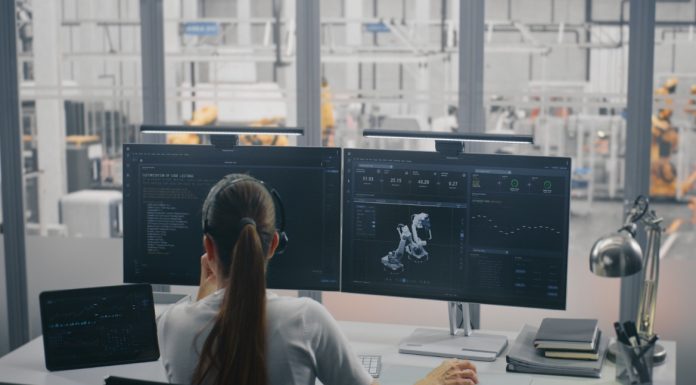
Australian manufacturers have long competed against distance. In an exclusive interview with Australian Manufacturing, Xometry CEO Sanjeev Singh Sahni discusses how AI can help manufacturers access more production capacity and simplify traditionally email-driven supply chains.